
Neural control
Contraction only occurs upon stimulation by a motor neuron.
This stimulus comes in the form of an action potential.
1. The motor neuron releases the neurotransmitter acetylcholine (ACh) at the neuromuscular junction (NMJ) which depolarises the the muscle fibre and causes it to produce an action potential also
2. This action potential propagates along the sarcolemma and continues down the T tubules into the sarcoplasm
3. The action potential causes the voltage-gated Ca2+ channels (dihydropyridine receptors) in the T tubules to release a little Ca2+ into the sarcoplasm and to interact with the Ca2+-release channels (ryanodine receptors) of the SR and activate them (release a greater amount of Ca2+)
4. This results in the net efflux of Ca2+ from within the SR to the sarcoplasm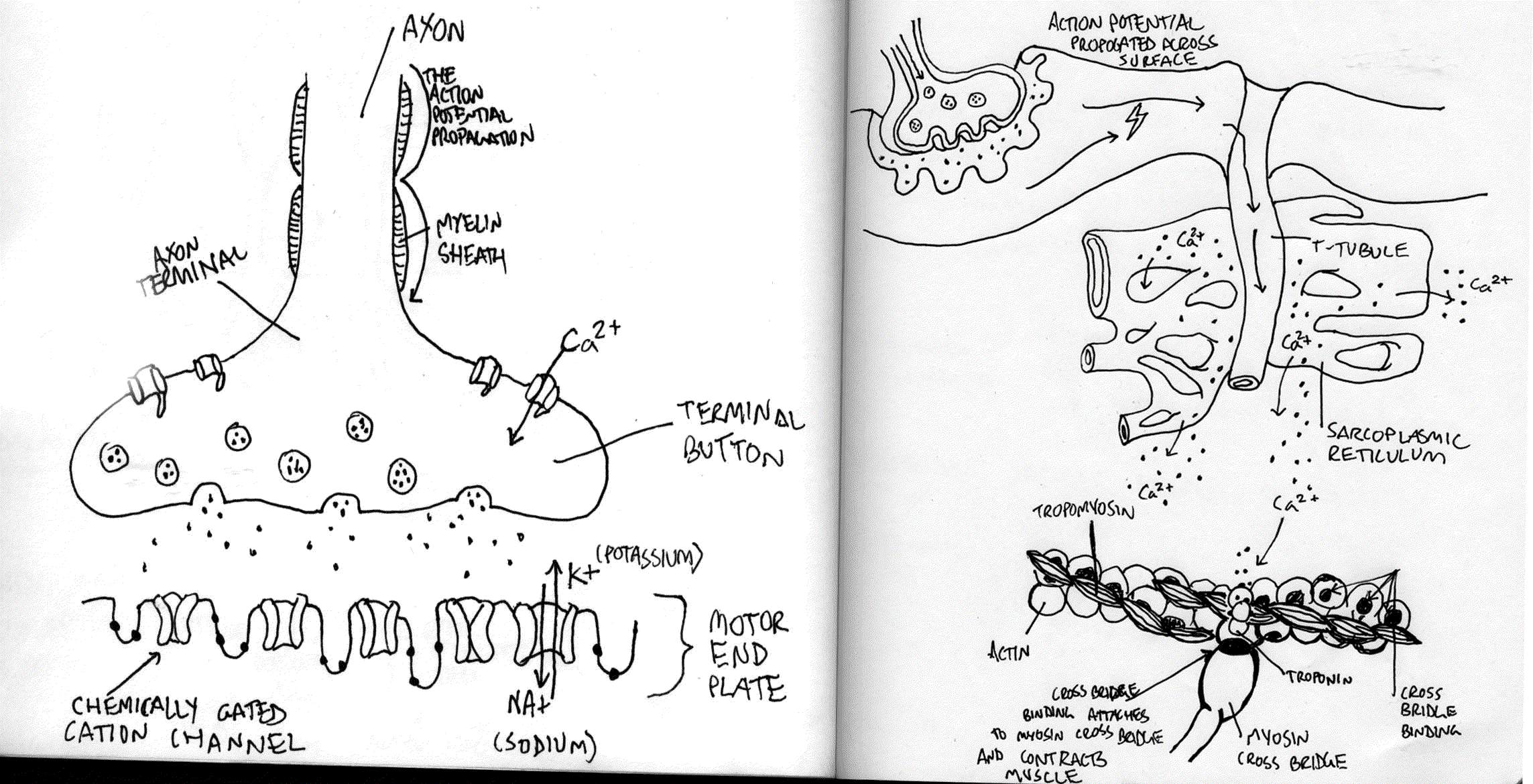
5. Increased concentration of Ca2+ allows binding of Ca2+ to troponin and exposing of G actin binding sites so contraction can occur
6. When the action potential ends, Ca2+ dissociates from troponin and not replaced and transported back into the SR
- Muscle contraction and relaxation are both ATP-dependent
7. Tropomyosin returns to its original postion hiding the G actin binding sites and contraction ceases